
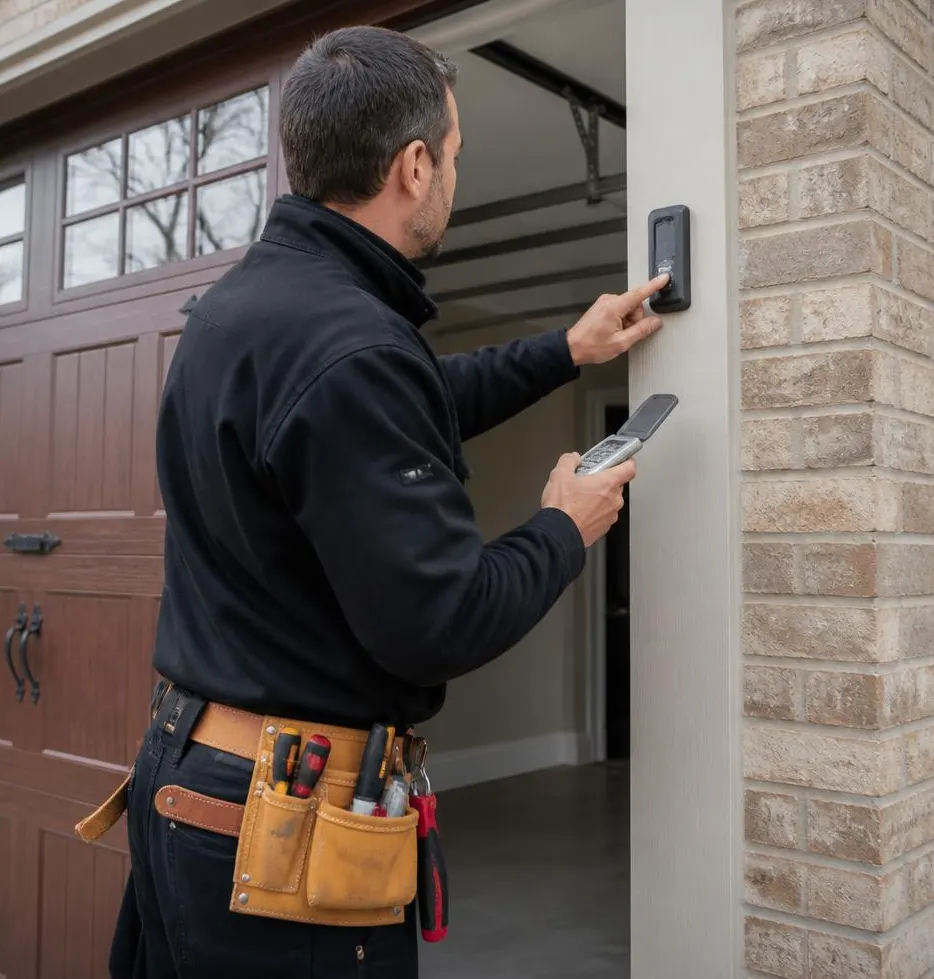
You hit the opener button and the door hesitates. It creeps up a few inches, stutters, then finally clears the bottom seal with a groan you haven't heard before. Or maybe it won't budge at all, and you're standing in the driveway at 7 a.m. wondering if something's actually jammed. In colder states, this is the moment people blame ice on the track. In Cutler Bay, there's no frost to blame — but the door can feel just as stuck, and the real causes are just as mechanical.
What You're Actually Noticing
Before getting into causes, it helps to pin down exactly what the door is doing, because the symptom points a technician toward the problem:
- The door moves in jerks instead of a smooth glide, especially in the first foot of travel.
- It's noticeably heavier when you try to lift it manually during a power outage.
- The opener strains or reverses partway up, as if something is fighting it.
- One side lags behind the other, so the door looks slightly crooked while moving.
- There's a grinding or squealing sound that wasn't there a few months ago.
Any one of these on its own might be minor. Two or three together usually means it's time to look at the hardware, not just add oil and hope.
Why This Shows Up Here Without Freezing Temperatures
A sluggish door in Cutler Bay isn't an ice problem — it's a moisture and corrosion problem, and the climate here produces it year-round, not just in winter. Hot, humid air sits on metal tracks and springs. Afternoon downpours during storm season push water and grit into the track. Salt air drifting in from the coast accelerates rust on anything unprotected. None of that needs a cold snap to cause trouble; it builds up steadily, and a lot of homeowners notice it right as the weather shifts and they start using the garage door opener less (or more) than usual.
Where a Technician Starts Looking
When Precision Garage Door techs get a call about a sluggish or jerky door, they work through the system in a specific order, because each component is easier to rule out than the next.
1. Tracks First
Tracks are the first thing checked because they're the most common culprit and the easiest to inspect. Humidity and storm debris — leaves, grit, dust blown in during a downpour — settle in the track channel and create friction. Salt air speeds up surface rust, which roughens the metal the rollers ride on. A tech will run a hand along the track feeling for pitting or buildup, and check with a level whether the track has shifted out of alignment, which can happen after a hard wind event even without visible damage.
The fix: cleaning out debris and light rust is quick. If the track itself is bent, pitted badly, or no longer plumb, it gets realigned or replaced rather than patched, since a warped track will keep chewing up rollers.
2. Rollers Next
Rollers take the next look because they're the parts in direct, constant contact with that track. Steel rollers rust from the moisture; older nylon rollers can crack or flat-spot after years of heat cycling. Either way, a roller that's no longer round doesn't glide — it clunks and drags, which matches the jerky-motion symptom almost exactly.
The fix: individual roller replacement is straightforward and inexpensive, but if several are worn, it's usually more efficient to replace the full set along with the hinges they sit in.
3. Springs
If the door feels heavy to lift by hand — the opener strains, or the door drops fast when disconnected — springs come under suspicion. Torsion and extension springs lose tension over time, but humidity and rust make a spring fail or weaken faster than it would in a dry climate, and a rusted spring can also bind rather than coil smoothly.
The fix: this is not a DIY repair. Springs are under heavy tension and require a trained technician with the right bars and gauge to replace safely, matched to the door's weight.
4. Opener Settings and Sensors
If the tracks and rollers look fine but the opener still reverses or hesitates, the next check is the opener itself — specifically the travel limits and the safety sensors near the floor. Humidity and condensation can fog or mist the sensor lenses, and moisture intrusion over time can affect the opener's internal settings or wiring connections. A door that behaves fine manually but fights the opener usually points here.
The fix: sensor cleaning and realignment is simple; if the opener itself has moisture damage or worn-out limit settings, reprogramming or, in older units, replacement may be the more durable answer.
5. Door Panel and Hardware
Last on the list, but worth checking on wood or composite doors: the panel itself can swell slightly in sustained humidity, which changes how it sits against the track and weatherstripping. Hinges, especially lower ones exposed to splashback from storms, can also rust and stiffen.
The fix: hinge replacement is routine. A swelling panel usually points toward a longer-term conversation about door material, since steel and insulated doors handle this climate with far less movement than wood.
When to Call Precision Garage Door of Cutler Bay
If the door is heavy to lift by hand, reverses on its own, or you hear grinding that wasn't there before, it's time to call rather than keep forcing it — a stressed spring or a badly worn roller can fail suddenly. Precision Garage Door of Cutler Bay handles garage door spring repair and cable & roller replacement as two of our most common service calls in this climate, and we check the whole system — tracks, hardware, opener sensors — in one visit so you're not calling back next month for the next part that was already on its way out.
If your garage door in Cutler Bay, FL is sticking, straining, or just doesn't move the way it used to, call Precision Garage Door of Cutler Bay for a straightforward diagnosis and a fix done right the first time.