
The short answer
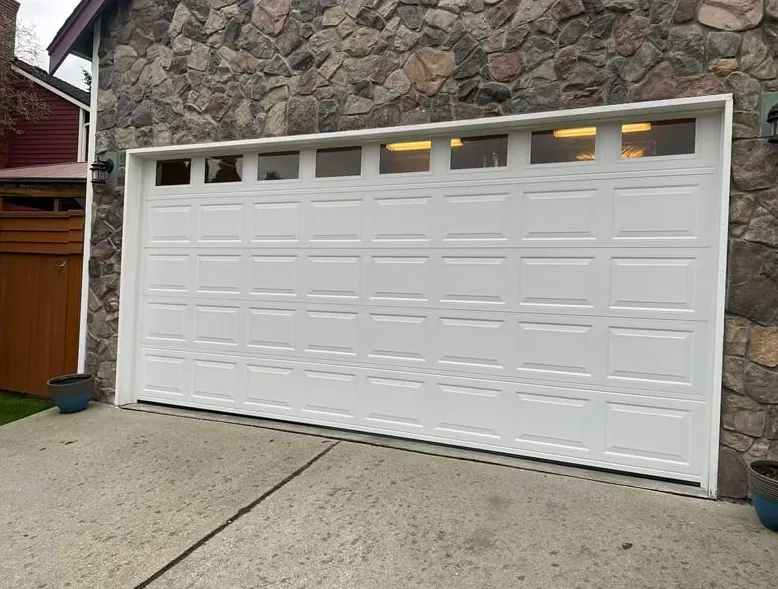
You have three real options for the garage door once the space behind it stops being a garage: keep it fully working, keep it but disable it, or take it out and frame in a wall. There's no universally correct choice — it depends on whether you ever want the space to be a garage again, how the HOA or a future buyer will feel about a windowed wall where a door used to be, and how much you want to deal with moisture in a sealed-up space. Here's what actually happens with each option, so you can settle the argument with facts instead of opinions.
Option 1: Keep the door fully functional
This is the lowest-risk choice if there's any chance the room goes back to vehicle storage later, or if you just want the flexibility of a huge opening for moving furniture, gym equipment, or workshop materials in and out. The door stays on its track, the opener stays wired, and you can still raise it on a nice afternoon for airflow.
The trade-off is insulation and sealing. A standard garage door is not built like an exterior wall — even an insulated door has more air leakage around the edges than framed construction. If you're running a window AC unit or extending ductwork into the space to make it comfortable, that cool, conditioned air meets a door panel that's heating up in direct sun, and you get condensation on the inside face during our humid stretches. Good weatherstripping along the bottom seal and sides cuts this down a lot, and it's worth checking that seal is tight before you finish the room with drywall or flooring that moisture can damage.
Option 2: Keep the door but disable it
Some homeowners bolt or lock the door in the closed position and disconnect the opener, so the garage still looks like a garage from the street — which matters for curb appeal and for buyers who assume a garage door means a garage. This preserves resale flexibility better than a permanent wall, since converting back later is mostly a matter of re-enabling the door rather than cutting a new opening.
The catch is that an unused door in a hot, humid climate doesn't get better by sitting still. Springs that never cycle can still corrode from humidity and salt air, especially closer to the coast, and seized hardware is harder to free up after months of inactivity than it is to maintain while it's being used regularly. If you go this route, it's worth manually cycling the door every so often just to keep the springs, rollers, and track from seizing, and to catch rust before it spreads.
Option 3: Remove the door and frame in a wall
This is the permanent option — the door, track, and opener come out, and a conventional insulated wall with proper vapor barrier goes in. It's the best long-term choice for a room that needs to stay dry and climate-controlled, like a home gym with mirrors or a finished office, because you're no longer fighting the air leakage and thermal bridging that come with any garage door, insulated or not.
It's also the least reversible and the most involved project, since it typically means new framing, electrical, and finish work rather than anything a garage door company handles. Before committing, check with your local building department about what the conversion requires for your specific property — rules vary by jurisdiction and by whether the square footage will be counted as living space. One thing worth knowing: many real estate agents and appraisers don't count a converted garage as full living area unless it was done to code, and plenty of buyers specifically want a garage back. If resale is anywhere on your mind, that's a real trade-off against Option 1 or 2.
The moisture problem nobody mentions
Whichever option you pick, southern Miami-Dade's climate works against a sealed-up garage. Afternoon downpours, high humidity, and salt air near the coast mean any gap or weak seal becomes a path for moisture, and moisture sitting against metal hardware means rust faster than you'd expect. If the converted space has AC running most of the day, the temperature difference between inside and the hot, humid outdoor air makes condensation worse wherever there's a thermal weak point — and an old or poorly sealed garage door is exactly that. This is also why wind-load-rated doors matter even for a disabled or rarely-used door: it's still your exterior wall facing storm season, and it needs to hold up the same as it would on an active garage.
When to call Precision Garage Door of Cutler Bay
If you're keeping the door — working or disabled — it's worth having it checked before you finish the room around it. We handle Garage Door Maintenance & Tune-Up to catch rust, worn weatherstripping, and spring wear before they become bigger problems, and Cable & Roller Replacement if hardware has already started corroding from sitting unused. If you're leaning toward removing the door entirely, we can safely take out the door, springs, and opener — springs under tension are not a DIY job — so your contractor has a clean opening to frame.
Not sure which option makes sense for your garage? Call Precision Garage Door of Cutler Bay, FL, and we'll take a look at the door, the space, and give you a straight answer.